
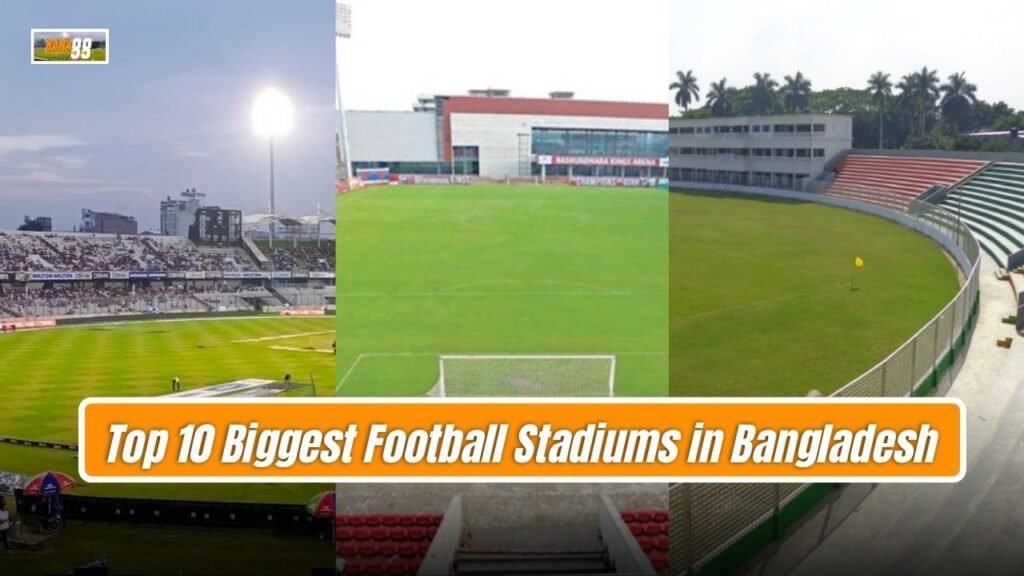
Football has always held a special place in Bangladesh’s sporting culture. Although cricket dominates headlines today, the country’s football heritage remains rich and deeply rooted among passionate supporters from Dhaka to Chattogram. Across the nation, the biggest football stadiums in Bangladesh continue to serve as landmarks of local pride, hosting thrilling league matches, regional tournaments, and unforgettable international events.
These stadiums are more than concrete structures with seats and floodlights. They represent decades of football history, emotional rivalries, and the dreams of thousands of young players. From historic venues that witnessed Bangladesh’s greatest football achievements to newly built modern arenas, every stadium has its own story.
Table of Contents
List of 10 Biggest Football Stadiums in Bangladesh
10. Bashundhara Kings Arena – Dhaka
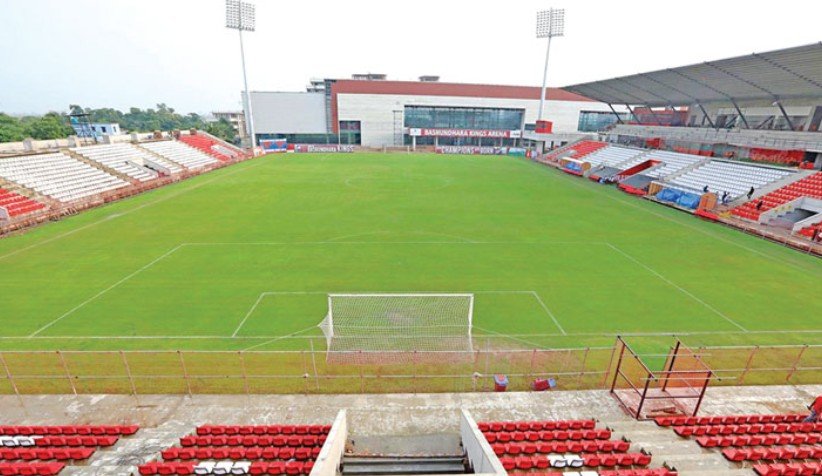
The Bashundhara Kings Arena is the most advanced football stadium currently operating in Bangladesh. Situated inside the Bashundhara Sports City complex in Dhaka, the venue officially opened in February 2022 and quickly became one of the country’s premier football destinations. Unlike traditional government-owned grounds, this arena stands out as the first privately owned football stadium regularly used in the Bangladesh Premier League.
Despite having a smaller capacity compared to older stadiums, the arena compensates with world-class infrastructure. It includes FIFA-standard grass, high-quality dressing rooms, floodlights, media facilities, VIP sections, and modern broadcasting systems. The venue also became the first solar-powered stadium in Bangladesh in late 2024, marking a significant step toward sustainable sports infrastructure.
Bashundhara Kings enjoyed enormous success at this ground, maintaining an impressive unbeaten streak for nearly two years before Mohammedan Sporting Club finally defeated them in 2024. The arena has also hosted FIFA World Cup qualification matches and international friendlies, further strengthening its reputation among the biggest football stadiums in Bangladesh.
| Location | Bashundhara, Dhaka |
| Capacity | 14,000 |
| Opened | 2022 |
| Home Teams | Bashundhara Kings, Fortis FC |
| Stadium Type | Private Football Stadium |
| Special Feature | Solar-powered venue |
ALSO READ: Top 10 Best Bowling Figures in ODI Matches for Bangladesh
9. National Stadium – Dhaka
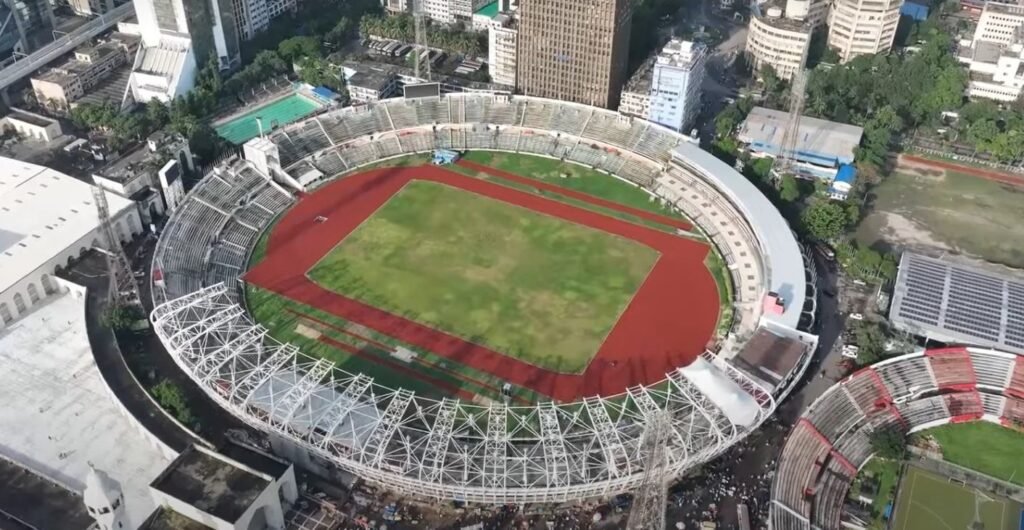
The National Stadium in Motijheel remains the emotional center of Bangladeshi football. Originally established in 1954, the ground was initially designed for cricket before becoming the permanent home of Bangladesh football after cricket moved elsewhere in 2005.
Few stadiums in South Asia can match its historical importance. Bangladesh captured its first-ever SAFF Championship title here in 2003 in front of a massive crowd. The venue also hosted the famous international friendly between Argentina and Nigeria in 2011, featuring global football icons such as Lionel Messi and Sergio Agüero.
Although extensive renovations between 2021 and 2025 reduced its seating capacity significantly, the stadium now offers modernized facilities and improved infrastructure. Its historical significance, however, remains untouched. It continues to rank among the biggest football stadiums in Bangladesh.
| Location | Motijheel, Dhaka |
| Capacity | 22,085 |
| Opened | 1954 |
| Home Teams | Bangladesh National Football Team |
| Major Event | Argentina vs Nigeria (2011) |
| Renovation Period | 2021–2025 |
8. Rangpur Stadium – Rangpur
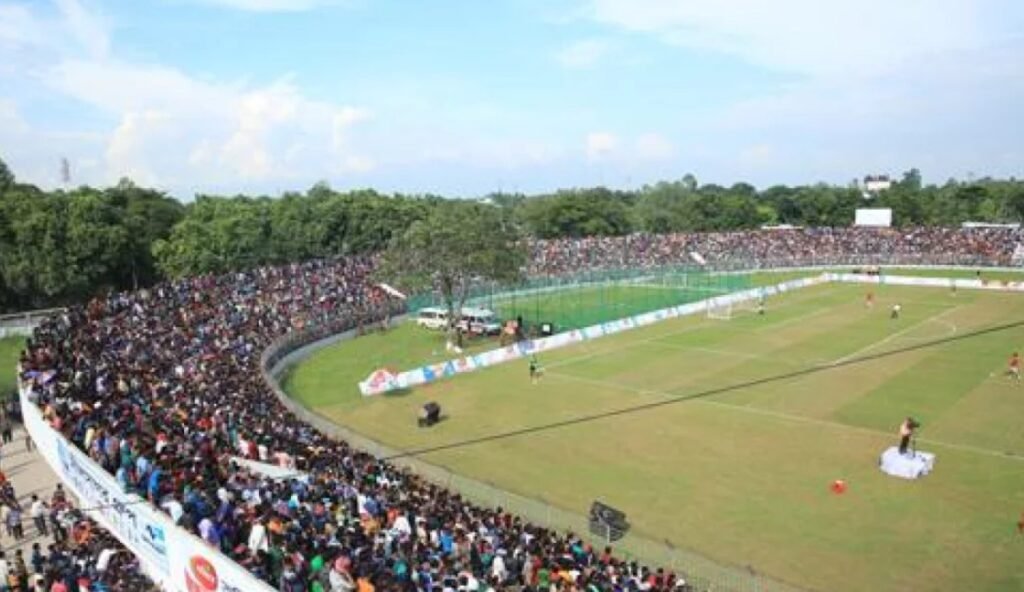
For decades, Rangpur Stadium has served as the football heartbeat of northern Bangladesh. Opened in 1968, the venue became an essential sporting center for the entire Rangpur division and remains one of the most recognizable district stadiums in the country.
Football fans in Rangpur are known for their strong support and energetic atmosphere during regional tournaments. The stadium regularly hosts district competitions and development programs that help nurture young football talent from northern Bangladesh.
Its long-standing presence and connection with local football culture make it one of the country’s most respected regional venues and one of the biggest football stadiums in Bangladesh.
| Location | Rangpur |
| Capacity | 25,000 |
| Opened | 1968 |
| Home Team | Rangpur Football Team |
| Main Use | Football and regional events |
| Region Served | Northern Bangladesh |
7. Tangail Stadium – Tangail
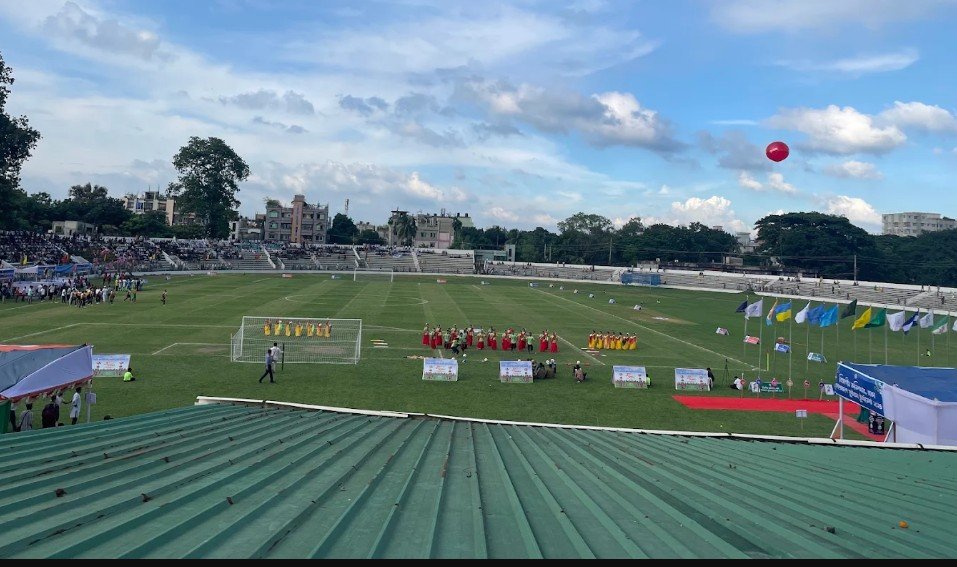
Tangail Stadium is among the more modern district-level football venues in Bangladesh. Since opening in 1998, it has become a major sporting destination within the Dhaka division. The stadium regularly hosts football matches, athletic events, and various community competitions.
The ground is particularly important for football development in central Bangladesh. Its facilities and large seating capacity allow it to organize significant regional tournaments that attract strong local support.
Tangail Stadium continues to play a major role in maintaining football enthusiasm beyond the major metropolitan areas and remains one of the biggest football stadiums in Bangladesh.
| Location | Tangail |
| Capacity | 25,000 |
| Opened | 1998 |
| Home Team | Tangail Football Team |
| Main Events | District and regional tournaments |
| Region | Central Bangladesh |
6. Mostafa Kamal Stadium – Dhaka
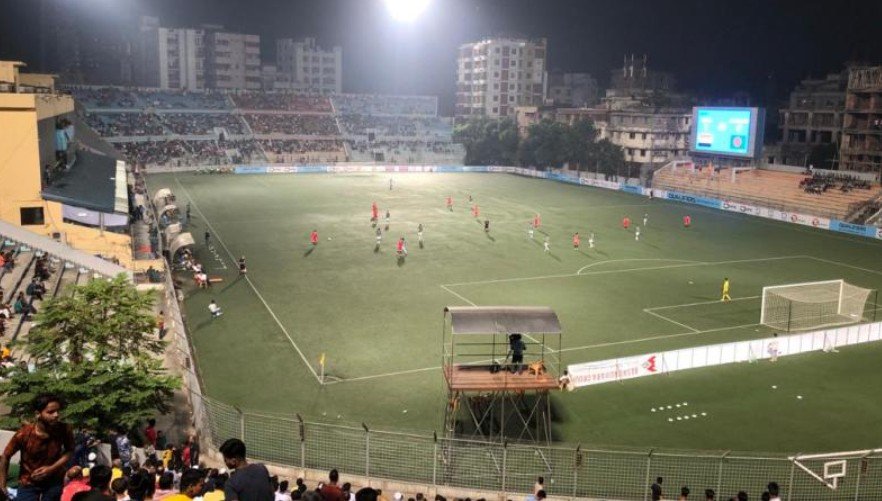
Located in Kamalapur, Mostafa Kamal Stadium is one of Dhaka’s key football grounds outside the top-tier national venues. Opened in 2001, the stadium became an important part of Bangladesh’s professional football structure by hosting lower-division league competitions.
The Bangladesh Championship League, Dhaka Senior Division League, and other domestic competitions frequently take place here. The venue offers emerging clubs and young footballers an opportunity to compete in a professional environment.
Although it may not enjoy the same international attention as the National Stadium, its contribution to grassroots and club football in Bangladesh is extremely valuable. It remains one of the biggest football stadiums in Bangladesh for development football.
| Location | Kamalapur, Dhaka |
| Capacity | 25,000 |
| Opened | 2001 |
| Main Competitions | Bangladesh Championship League |
| Managed By | National Sports Council |
| Importance | Development football venue |
5. Sheikh Kamal Stadium – Nilphamari
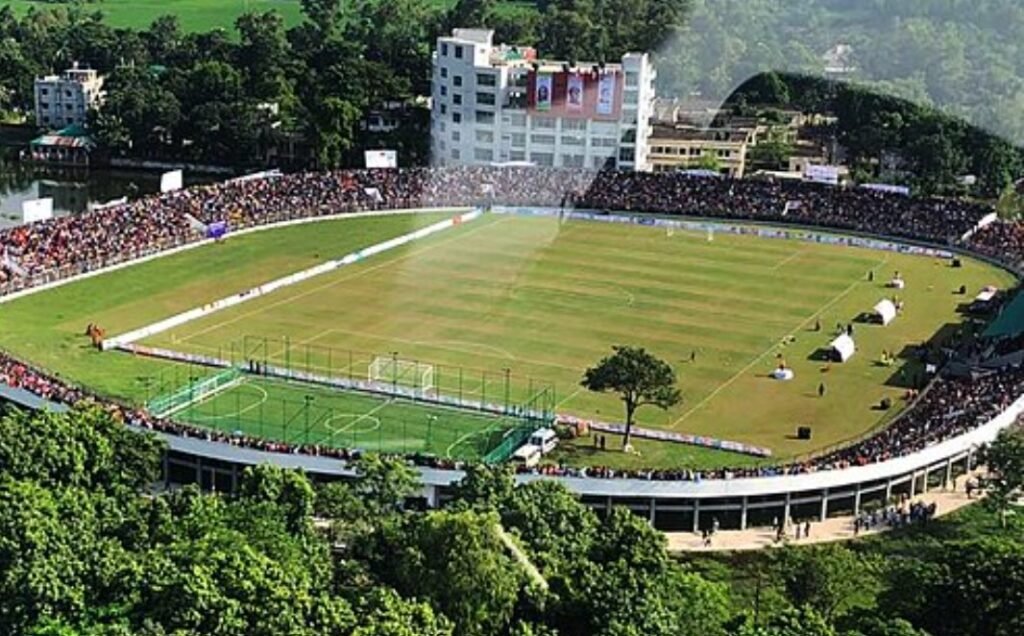
Sheikh Kamal Stadium rose to national prominence during the dominance of Bashundhara Kings in Bangladeshi football. Before the construction of the Bashundhara Kings Arena, this venue in Nilphamari served as the club’s home ground during one of the most successful periods in their history.
Named after Sheikh Kamal, a major figure in Bangladesh sports culture, the stadium became famous for its packed galleries and energetic atmosphere. Bashundhara Kings won their maiden Bangladesh Premier League title here in 2019, turning the venue into a memorable symbol of modern club football success.
The stadium’s popularity helped transform Nilphamari into one of Bangladesh’s strongest football centers outside Dhaka. Today, it remains one of the biggest football stadiums in Bangladesh.
| Location | Nilphamari |
| Capacity | 25,000 |
| Opened | 1984 |
| Former Home Team | Bashundhara Kings |
| Historic Achievement | 2019 BPL title |
| Named After | Sheikh Kamal |
4. Rafiq Uddin Bhuiyan Stadium – Mymensingh
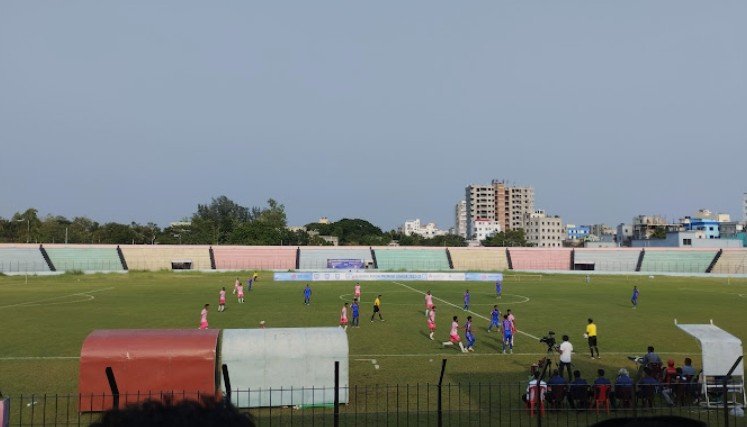
Rafiq Uddin Bhuiyan Stadium is one of the busiest football venues in regional Bangladesh. Established in 1961, the stadium has hosted numerous Bangladesh Premier League matches and national-level tournaments over the years.
Named after freedom fighter Rafiq Uddin Bhuiyan, the ground carries both sporting and historical significance. Clubs such as Bangladesh Police FC and Chittagong Abahani have used it as a home venue at different times.
Its central location and large fan base make it a lively destination whenever major football matches are held. This popularity has helped it become one of the biggest football stadiums in Bangladesh.
| Location | Mymensingh |
| Capacity | 25,000 |
| Opened | 1961 |
| Home Teams | Bangladesh Police FC, Chittagong Abahani |
| Main Use | Bangladesh Premier League matches |
| Named After | Freedom fighter Rafiq Uddin Bhuiyan |
3. Barisal Divisional Stadium – Barisal
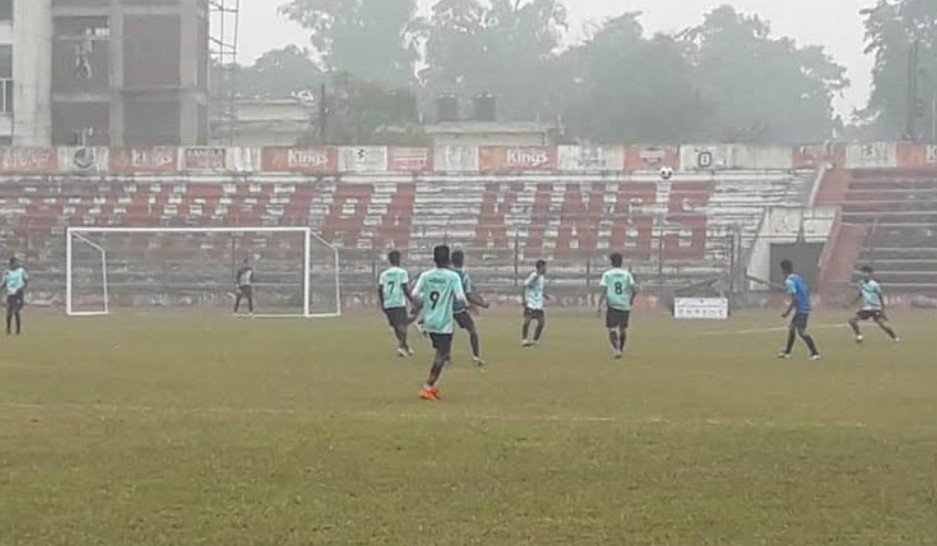
Barisal Divisional Stadium has long been the primary sporting venue in southern Bangladesh. Since opening in 1966, the stadium has remained central to football and athletics activities throughout the region.
The stadium’s large terraces create an exciting environment during divisional competitions and local rivalries. Football remains hugely popular in Barisal, and this venue regularly attracts enthusiastic crowds during important fixtures.
Its influence extends far beyond football, as it also hosts major athletic and community events throughout the year. This reputation secures its place among the biggest football stadiums in Bangladesh.
| Location | Barisal |
| Capacity | 30,000 |
| Opened | 1966 |
| Main Sports | Football and athletics |
| Regional Importance | Southern Bangladesh |
| Stadium Type | Divisional venue |
2. Faridpur Stadium – Faridpur
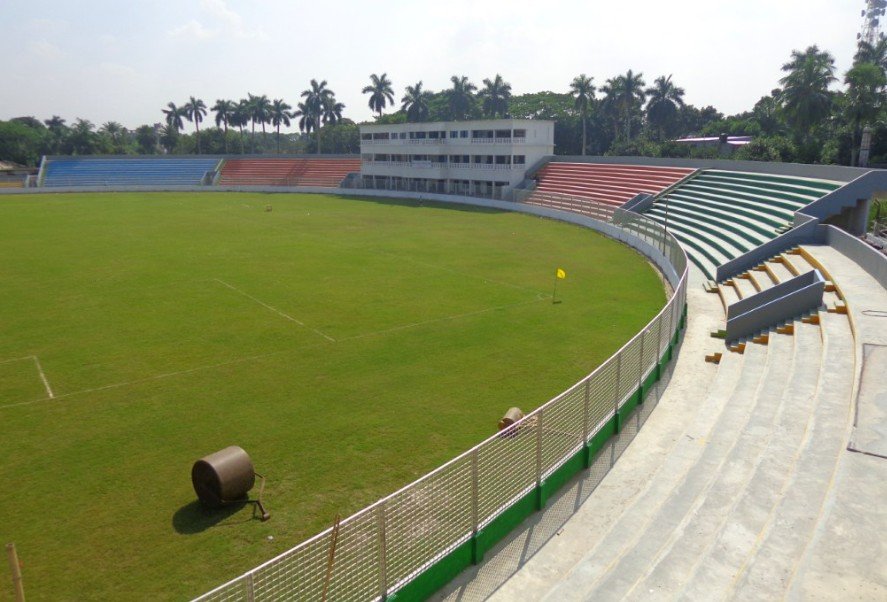
Faridpur Stadium stands among the largest district-level football venues in Bangladesh. Built in 1960, it has remained an important center for football and athletics for more than six decades.
The venue regularly hosts youth tournaments, district competitions, and major local sporting events. Despite receiving less national media attention compared to stadiums in Dhaka, its role in football development across south-central Bangladesh is highly significant.
Its large capacity and long history continue to make it one of the country’s most respected football grounds and one of the biggest football stadiums in Bangladesh.
| Location | Faridpur |
| Capacity | 30,000 |
| Opened | 1960 |
| Main Use | Football and athletics |
| Regional Importance | South-central Bangladesh |
| Stadium Status | Historic district venue |
1. M. A. Aziz Stadium – Chattogram
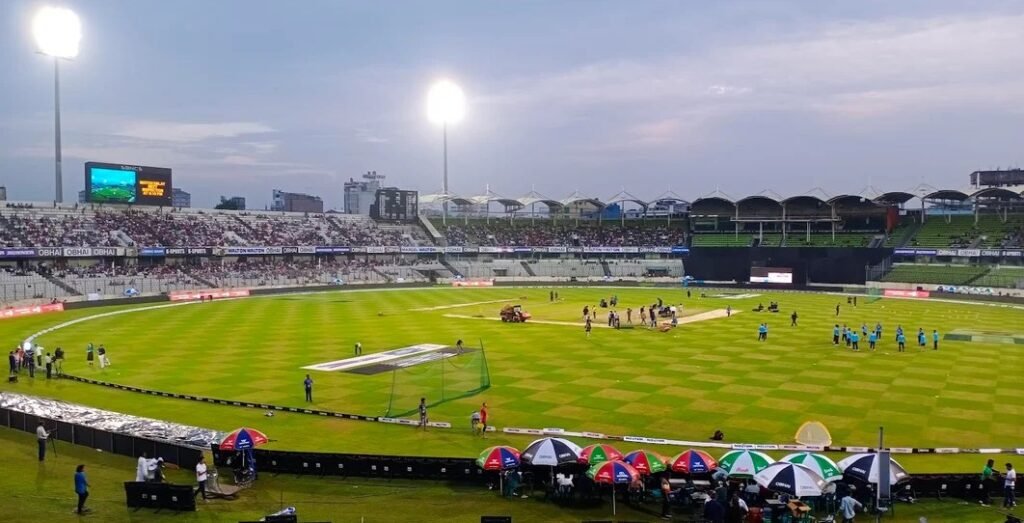
M. A. Aziz Stadium ranks as the biggest football stadium in Bangladesh by seating capacity and remains one of the nation’s most historic sporting venues. Located in Chattogram, the stadium originally opened in 1955 under the name Niaz Stadium before later being renamed in honor of freedom fighter Mohammad Abdul Aziz.
The venue holds immense historical significance because it served as a headquarters during the Bangladesh Liberation War in 1971. Beyond football, it has also hosted important cricket milestones, including Bangladesh’s first-ever ODI and its first Test victory.
In football, the stadium regularly hosts Chittagong Abahani matches and international club tournaments such as the Sheikh Kamal International Club Cup. Its enormous crowd capacity and deep historical roots make it one of the most iconic sports venues in Bangladesh and the leading name among the biggest football stadiums in Bangladesh.
| Location | Chattogram |
| Capacity | 30,000–40,000 |
| Opened | 1955 |
| Home Team | Chittagong Abahani |
| Former Name | Niaz Stadium |
| Historic Importance | Liberation War headquarters |
FAQs
1. Which is the biggest football stadium in Bangladesh?
M. A. Aziz Stadium is considered the biggest football stadium in Bangladesh, with a seating capacity ranging from 30,000 to 40,000 spectators.
2. Which football stadium in Bangladesh is privately owned?
Bashundhara Kings Arena is the first privately owned football stadium regularly used in the Bangladesh Premier League.
3. Which stadium is known as the home of Bangladesh football?
National Stadium in Motijheel is widely regarded as the emotional home of Bangladesh football because of its rich history and major international matches.
4. Which football stadium hosted the Argentina vs Nigeria international friendly in 2011?
The famous 2011 international friendly between Argentina and Nigeria, featuring Lionel Messi, was held at National Stadium.
5. Why are the biggest football stadiums in Bangladesh important?
The biggest football stadiums in Bangladesh are important because they host domestic leagues, international matches, youth tournaments, and regional competitions while preserving the country’s football history and culture.